Friday, December 26, 2014

Double Indemnity


Film noir literally means "black film." As you are watching the film, keep track of all the elements in the picture that seem dark or depresssing. Think about the character, setting, and storyline.


In the 1944 film Double Indemnity directed by Billy Wilder, elements of French noir give this film a classic theme. The plot is about an insurance representative, Walter Neff, goes to see one of his clients who is overdue on renewing his automobile insurance. Once he is at his client’s house, he meets the man's wife, Phyllis Dietrichson, whom he starts to fall for. She mentions how she wants to look into accident insurance, in case her husband has an “accident” while working on the oil rig. Neff thinks she wants to stage her husband’s death as an “accident” to receive money from his insurance policy.

This film is shot entirely in black and white with low-key lighting, a classic element of film noir. The sharp light and dark shadows that arise from specifically placed lights give the film a mysterious feeling. Another classic element of film noir that is shown in Double Indemnity is when Neff returns to Mrs. Dietrichson’s house at the end of the film. She is sitting in her chair and the venetian blinds on the window cast specific shadows onto the wall behind her. The characters also smoke throughout the entire film, which is a reoccurring element in French noir movies. Double Indemnity is also a crime/murder mystery/private eye film, one element that all of the films that are classified French Noirs are centered around. This film also has a voice over throughout and is shown in flashbacks, an element that adds to the private-eye-esque of it.


Double Indemnity has a pretty dark storyline as well. Mrs. Dietrichson essentially wants to get as much money off of her husband as she can. By taking out an accident insurance policy on her husband, if he were to die by accident, she would be the beneficiary of the policy. The money would then be hers. All along, she had been thinking about how she would take out this policy. But in the beginning, Walter truly sought to only renew the Dietrichson's automobile insurance. As the story goes on, it ends up being Walter who comes up with the entire plan to kill Mr. Dietrichson and stage his death to look like he accidentally fell off of the train. All of the dark acts actually take place in the dark. Literally. It all happens at night. Not to mention the film is in black and white. Which makes it extra dark. 


So with all of the dark-dark-ness, the murder, the sneakiness of the plot, and the cold, uncaring femme fatale, Double Indemnity is a classic French noir "black" film. 

Sunday, December 7, 2014

Witchflix

3 WITCHES

The three witch sisters in Macbeth are the most supernatural beings in the play. Some would even go as far as to say that they are even the most evil. But between giving out prophecies and haunting people, they like to sit on the couch and watch the tellybox, just like everyone else. If you're into scary movies, boy do they have great recommendations for you. But be careful; the shows may just make you want to kill your best friend.

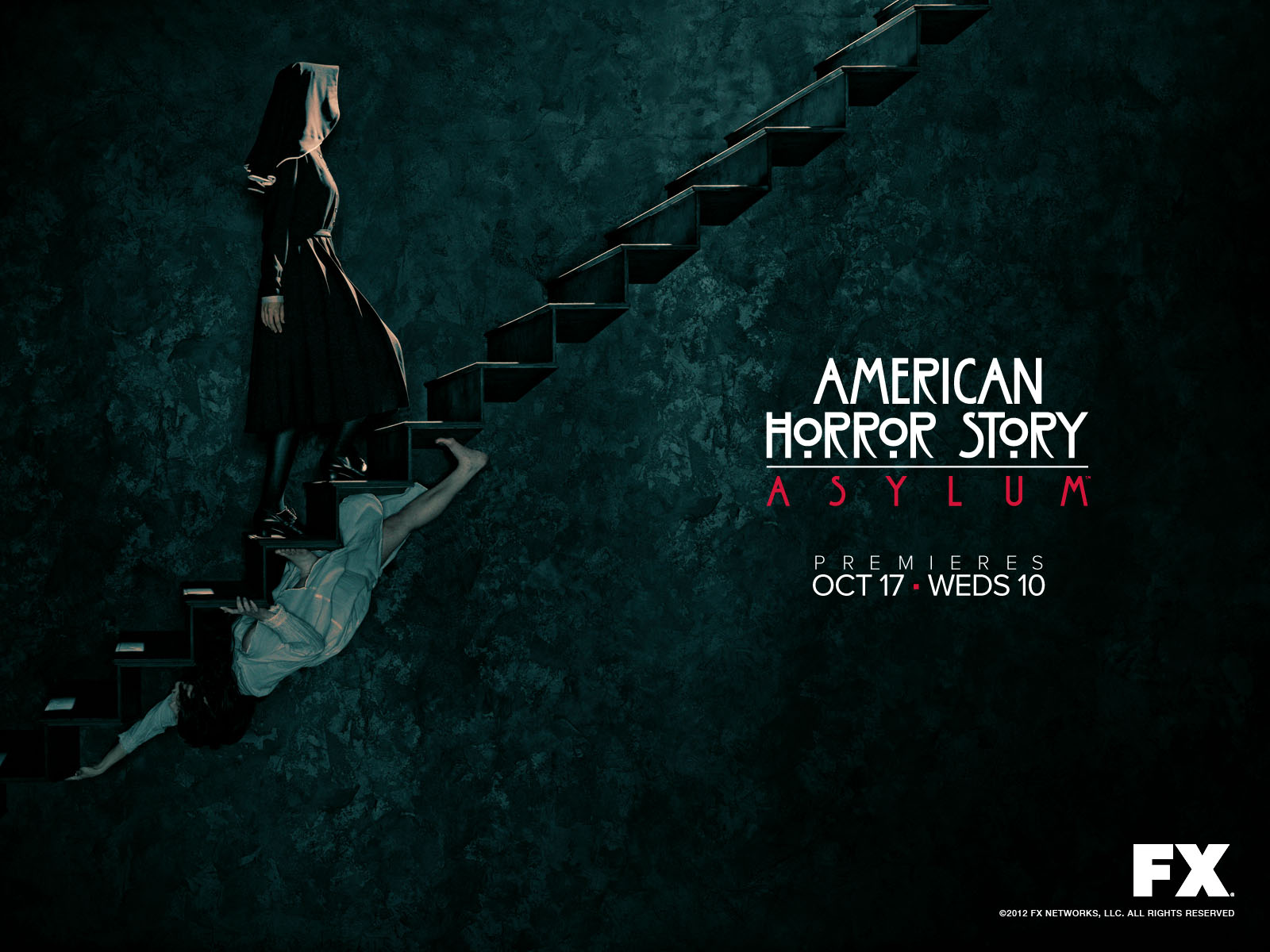
Their first recommendation, if you're looking for a television series, is American Horror Story. This series currently has 3 seasons on Netflix, with the most current season still playing on FX. "Exploring humankind's unsettling capacity for evil, this darkly twisted drama plays upon the power of supernatural fears and everyday horrors." Each episode is like creepy onto of creepy. The weird sisters would recommend this series because it explores how people and humans deal with seeing and experiencing supernatural things. Sometimes, certain occurrences bring out the person someone really is and other times it can completely break a person down.


The witches' next recommendation is for The Blair Witch Project. "Three student filmmakers march into the woods to make a documentary about a fabled witch credited with a string of murders dating back 200 years ago." This documentary-style movie will make you feel the presence of the horror that the characters went through. Obviously, the witches would choose this movie because the characters think they are going to mock a witch that never actually existed or committed the murders that happened in the past. Rule number 1: Never mock a witch. This movie extends the idea of the supernatural, specifically witches, that deal with murders, evil and prophecies, all of witch are components of the roles the weird sisters play in Macbeth.


Perfect Sisters is sort of different from the category of the other shows the three witches would most likely recommend. "Based on a real-life incident, two sisters manage to cover up the murder of their mother but their story unravels when they tell their friends." This movie steps back a little from the horror/thriller but still infuses it with mystery. The witches pick this one also because of the relationship between the two sisters, dealing with a secret and dealing with the murder of their mother. In Macbeth, the witches are referred to as "weird sisters," but Shakespeare doesn't elaborate any further on their relationship. We could learn more about the relationship between the witches from this recommendation.


Another choice the three weird sisters recommend is Oculus. Personally, I have seen (more like forced to see) this movie and it is creeeeeepy. "Now young adults, siblings Tim and Kaylie are still trying to recover from -- and get to the bottom of -- their parents' deaths more than a decade ago." I won't spoil it, but let's just say there is a mirror involved. With that as part of the context, the witches would probably recommend this movie because the mirror relates to the theme of appearance vs. reality. Some people may see one thing when they look in the mirror; others may see something completely different. This recommendation would help readers understand how the presence of the witches is only known by some. Macbeth knew he saw them. Banquo was unsure of whether or not he saw them.  


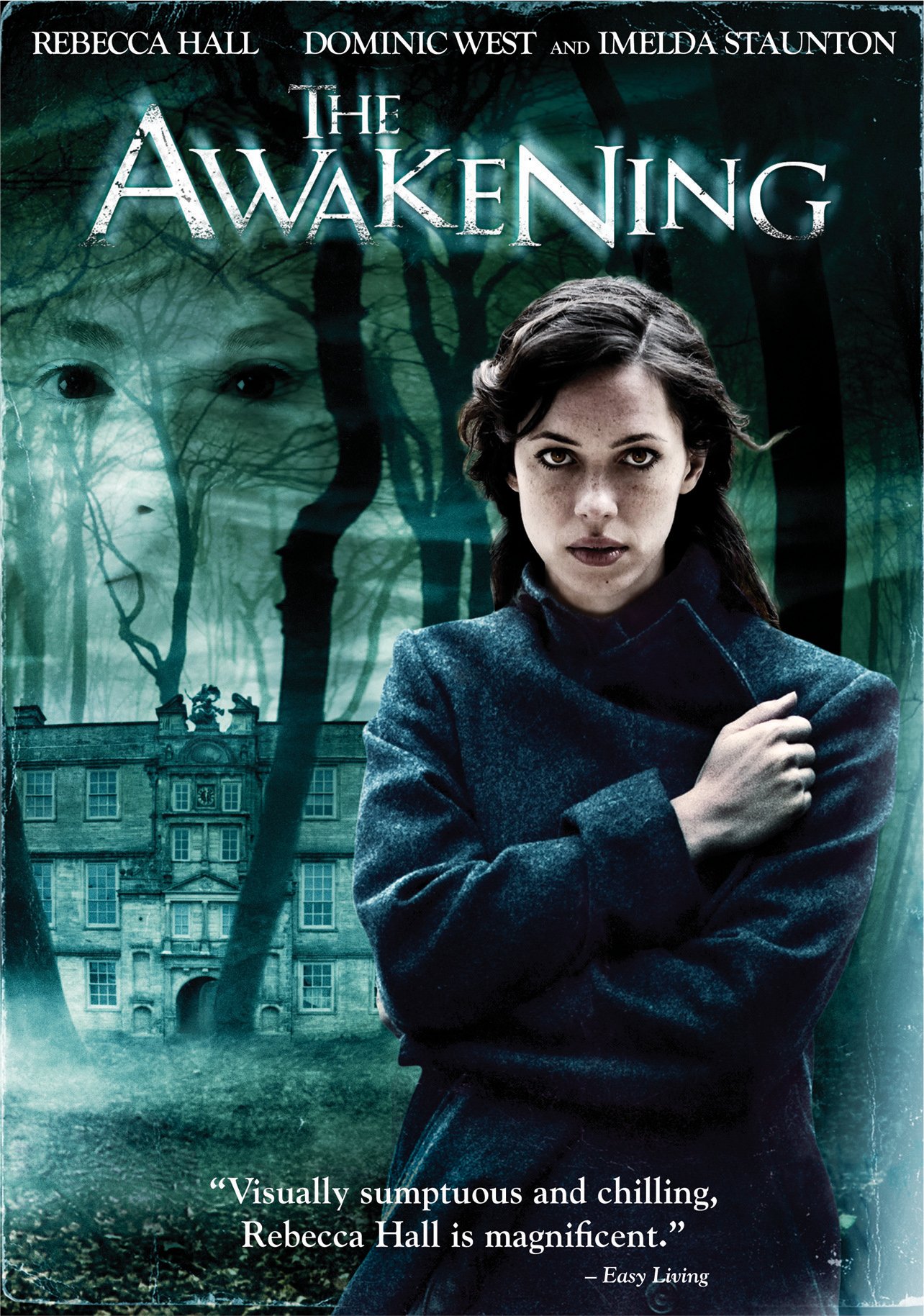
Lastly, if you didn't like the sound of any of the previous shows the witches recommended, The Awakening may be one you could handle. "A haunted boarding school calls on Florence Cathcart, who disproves hoaxes for a living. But the strange place leads Cathcart to question rationality." More mystery than horror, this movie is about how occurrences, such as people seeing ghosts and objects moving without being touched, can be questioned and how not everything has a rational answer. In Macbeth, Macbeth himself questions reality, especially when he thinks he sees the ghost of Banquo. This last recommendation the witches may have allows us to look at the themes of appearance vs. reality and the supernatural.


So if you're ever in the mood to be thoroughly scared, just take into account a recommendation from the three witches. But make sure you're ready, because things can't be unseen.


Saturday, November 15, 2014

Are you a man, Macbeth?

The time is the 21st century. Values and ideals of "manhood" have changed to a degree since Shakespeare's times. When reading Macbeth, Lady Macbeth, in particular, frequently comments on Macbeth's manhood, or lack there of. In the lead up to the murder of King Duncan, Macbeth is hesitant because he is faced with killing the King, who is also his friend, for the throne.

In Act 1, Scene 7, lines 49-51, Lady Macbeth says " When you durst do it, then you were a man;/And to be more than that you were, you would/Be so much more the man." Here Lady M is saying that once he commits the murder and "durst do it," he will become "more the man" than he was before. This ideal of having to kill someone to prove, especially to your wife, that you are a man is a value that society had in the 16th century. I also don't agree with the fact that Lady Macbeth sort of belittles Macbeth when he says he doesn't want to and can't kill Duncan. Mocking his inability to carry out a task (such as MURDER) is not helping his manhood. After Duncan is dead and Macbeth and his Lady are conversing, Macbeth says "I am afraid to think what I have done." (2.2.55) Macbeth's conscience is wavering at this point, which is a something that wouldn't happen to a "strong man."


In modern times, the values of manhood have been altered.  My views are different from those in the text because I personally don't think murdering someone constitutes a guy as a "man." Quite the opposite, I'd say. But by saying that would be the opposite, I'm not saying that he would be considered feminine. He would be seen as a figure that resorts to violence to solve problems, which is not a good way to deal with your problems. Obviously.

Society I think, as a whole, says that values such as being respectful, knowledgeable, and having the ability to get things done in a mature way represent a guy who has reached manhood. But "manhood" itself isn't a clearly defined concept and doesn't have a clearly defined time in a guy's life where it's like Boom, you are now considered a man.

I think values for manhood should be determine by men, as a whole, but they should also take into consideration what values women like. For me personally, a guy will not (and should not) have to kill someone to prove his manhood. All that will get you is life in jail. Just bring me some chocolate and I'll accept your manhood, in whatever state it may be.

On a side note, it's also really kind of weird, from today's stand point, that Lady Macbeth is like You're such a wimp, just kill the king already . . . Oh you're not going to do it? Well I will. Oh wait, he looks like my father, so I can't actually do it. But Lady Macbeth's entrancement with becoming more masculine is another topic for exploration which I'll save for another time.


Saturday, November 1, 2014

#IBMakingArt

What can you not see?

The Contemporary Art Museum was a pretty interesting place. I typically shy away from art museums unless they have, like this one, modern pieces of art. Not that I have anything against the North Carolina Art Museum, which has older pieces as well as newer ones. I just can't stand and look at paintings and interpret the artists' work for more than 2 or 3 minutes before I get bored.

Currently, CAM is displaying the exhibit Limited Visibility: Contemporary Art from Latin America. Each of the exhibits has something you can't physically see, whether it isn't there or it is obstructed from our view. The overall feeling I got from this exhibit was amazement. It was intriguing to see, on one level, what physical work was being displayed. Then, you hear/read the artist's statement and realize what is missing or that the physical piece in front of you is lacking something. Such an exhibit is, to me, more interesting because there is an element of curiosity that leads you to examine the artwork on a deeper level.


Pablo Rasgado, "Unfolded Architecture," 2014, Sheet rock

This artwork by Pablo Rasgado in the Raleigh Contemporary Art Museum's exhibit Limited Visibility is a composition of white sheet rock, which was actually cut out of the wall downstairs. Rasgado completed this project at CAM this year.

Rasgado's idea behind this piece, according to Craven Allen Gallery, is to "displace the act of erasure from itself to its environment." The work is representational/abstract. Since it was physically cut out of a pre-existing CAM wall and then reassembled, it is representing the idea of something or someone being taken from one location or home and being transposed in a different location or home. Such an idea is one that could apply to anyone who has moved from one place and had to adapt to a new place. Rasgado could be commenting on our society, where many immigrants leave their home countries for various reasons and are forced to assimilate as one in a new culture.

Rasgado has arranged these pieces of cut sheet rock randomly to form a complete rectangle. Each piece is white, with no color added, which could symbolize unity and similarity. The individual pieces that have been cut out are not even around the edges, which could also represent how people and groups can have similarities and come together as one but specifically, each individual is unique and different. Sheet rock is an interesting medium, simply because it's sort of hard to work with on a small scale.

The meaning of this piece is that even if you take someone or something out of the original environment, commonalities can still unite that person or thing into one. Rasgado's style and medium of artwork is with sheet rock and such like materials. He cuts out pieces from one wall of a place and transposes it together. The theme of "displacing the act of erasure from itself to the environment" can be applied to many things in our society today, such as immigration and movement of wildlife. This idea is especially relevant in our world today because of the massive movements of cultures into new places where already existing cultures are dominant.

I think this piece of Rasgado's was chosen by the curators to be included in Limited Visibility because the viewer doesn't know where the sheet rock was initially taken from or why. There is an element of unknown in the piece that isn't revealed and left up to the viewer for interpretation. Overall, I really enjoy the composition and theme of Pablo Rasgado's "Unfolded Architecture." He doesn't use a conventional medium, which makes it more interesting to me. There is a general feel of similarity and unity in the piece but at the same time, each individual part of the sheet rock isn't uniform. They are generally different sizes and shapes but they are each the same color, texture, and medium.

Good job, Pablo. I really like it.


Tuesday, October 14, 2014

7 Deadly Sins

http://wallstreetjobreport.com/wp-content/uploads/2012/03/Ralph-Lauren-1-83Kd1Rqozn-1024X768.jpg 
Author: unknown
Date: unknown
Place of publication: Ralph Lauren

In this advertisement for the clothing line Ralph Lauren, a couple is seductively lying on the beach. They are obviously wearing Ralph Lauren clothes, which is the purpose of such advertisement. But if you dive deeper into the meaning, you can tell that this ad displays the Deadly Sins of avarice and lust. Whoever took this picture had the intention of selling the (insanely expensive) clothes, saying that if you buy Ralph Lauren, you and your love could end up happily together lying on a beach. Which, of course, is completely unrealistic but hey, I guess it could happen to those select few. The intended audience for this ad is for youngish men and women who are well off enough to afford such clothing and who desire to love and to be loved. Such an advertisement may also be aimed at people of a specific body type, because the models shown in this picture are what our society has defined as "flawless." That's why they are models. 

Mass media uses language and in this image especially, layout and color, to invoke a feeling of avarice and lust. From a photographer's point of view, the two models' eyes are looking directly at the viewer, drawing them in and suggesting power. The colors of the picture are also cool, suggesting that they are in a simple place. In this ad, there is no language except for the logo of the company. This way, the author is making the viewer interpret the meaning of the picture themselves. Stereo-typically, Ralph Lauren is a clothing line for wealthy individuals who feel the need to show others how much money they have by spending it on these clothes. Avarice is directly involved with this ad because those who typically buy Ralph Lauren feel the need to buy more of their clothes. Textual bias is apparent because originally, this picture would have been in an issue of the Ralph Lauren catalog. The authors of such chose models they felt represented the ideas they want to portray through their clothing line, like how it is for the "elite" (who play polo, for example) and those full of lust. Stereotypically, most advertisements for Ralph Lauren feature either a beautiful white female or a handsome white man, which, again, plays into the intended, targeted audience. That's not to say, however, that people of other races can't or don't buy this brand. In a few other ads, there is a black male who is the sole model. But those don't appear frequently. 

Advertisements, such as this and most of the other Ralph Lauren pictures, are beautiful to look at (at least I think so) but the message they portray is that of avarice and lust. To some, this is exactly what they are looking for. For others, it's just a reminder of how materialistic our world is.

Sunday, October 5, 2014

Jane Eyre


"Three other visitors, ladies, now entered the room. They ought to have come a little sooner to have heard his lecture on dress, for they were splendidly attired in velvet, silk, and furs. The two younger of the trio (fine girls of sixteen and seventeen) had grey beaver hats, then in fashion, shaded with ostrich plumes, and from under the brim of this graceful head-dress fell a profusion of light tresses, elaborately curled: the elder lady was enveloped in a costly velvet shawl, trimmed with ermine, and she wore a false front of French curls."

Charlotte Bronte, author of Jane Eyre, decided to use irony in the passage above. But before I explain Bronte's use of irony, a little background about chapter 7 of Jane Eyre; Jane, a young girl in England, describes her life during the cold winter months. She tells how she and the other girls she's with live on only minimal things, such as two outfits and half a piece of bread at each meal (except at tea-time on the Sabbath, when they got a WHOLE piece of bread). When Jane goes to school, she's met with somewhat of a surprise. Mr. Brocklehurst (what a horrible name) comes to visit the girls. He surveys the classroom, and then speaks with the teacher, Miss Temple. Brocklehurst goes on a little bit of a rant about how "the laundress tells (me) some of the girls have two clean tuckers in the week: it is too much; the rules limit them to one." Okay, that's crazy. You try have just one clean pair of tuckers (whatever those are) per week. Then he goes on to say "I find, in settle accounts with the housekeeper, that a lunch, consisting of bread and cheese, has twice been served out to the girls during the past fortnight. How is this? I looked over the regulations, and I find no such meal as lunch mentioned." That's a little harsh. THEN, (he's still not done commenting) he comments on how some of the girls have curly hair, to which Miss Temple tells him the girls' hair is naturally curly. He replies  "Naturally! Yes, but we are not to conform to nature; I wish these girls to be the children of Grace: and why that abundance? I have again and again intimated that I desiire the hair to be arranged closely, modestly, plainly. Miss Temple, that girl's hair must be cut off entirely." Excuse me. What? I wish some random guy would tell me I have to cut off my NATURALLY CURLY HAIR because it's CURLY. 

But here's the best part. Charlotte Bronte, the author, then describes Mr. Brocklehurst's family, specifically the girls, who happen to pop in to the classroom he's in. Guess what they are wearing. Basically clothes that, in today's world, we would attribute came from like Saks Fifth Avenue. 'They were splendidly attired in velvet, silk, and furs. The two younger of the trio had grey beaver hats, shaded with ostrich plumes, and from under the brim of this graceful head-dress fell a profusion of light tresses, elaborately curled: the elder lady wore a false front of French curls." THEY COULD HAVE CURLY HAIR BUT THE OTHER LITTLE GIRLS COULDN'T. This use of irony, describing the things the school-girls couldn't have but his girls could, provides a commentary on the social perceptions of class at the time. This Brocklehurst guy obviously has power in society. Therefore, he and his family are above the others. They can wear whatever they want and not have to conform to the social restrictions posed on the lower-class, poor schoolgirls. Bronte's use of irony in describing Brocklehurst's family is clear. Without knowing that Brocklehurst has the power to tell girls they can't have curly hair, eat bread and cheese, and have more than one tucker, you could tell by the description of his family that they are socially higher in class than everyone else. Perceptions of class at the time were denoted by what clothing they wore. If you got more than a tucker and could have curly hair, you were better off class-wise than others. 

In some ways, this can still be seen in our society today. It's more prevalent outside of a single setting, such as in a big city, where you can distinguish between those who have money to spend on nice clothes with well-known names from expensive stores and those who have the plain, not-as-fancy, clothes. At least those who are better off don't go around telling those that have less that they can't wear their hair a certain way.


Saturday, September 20, 2014

Your Name Here

Julia

Elizabeth 

Maron


What does "Julia" mean? Where does it originate? 

Julia is of Latin origins, meaning "youthful." In old times in ancient Rome, it was given to the women in the house of Julius Caesar. It is also (according to nameberry.com) Shakespearean, Dickensian, Orwellian, and Harry Potter-related. There is also a butterfly called the Julia butterfly, which I have seen before. Basically, it's the best name ever. Some names that my mom liked at the time I was born were Emma, Evie, and Sophie. But my dad didn't like any name that sounded like it was shortened ie: Sophie from Sophia. My parents didn't want my sister and I's first names to be family names. They reserved those for our middle names. Elizabeth was my father's mother's middle name. Jeanette, my sister's middle name, was my mother's mother's name. In 1997, when I was born, Julia had a popularity rank of #37.

I love my name. In my 17 years of life, I have only met a handful of people with the same name. Two of them were in my classes in middle school, which is insane because up until that point, I had never encountered anyone with the same name as me. As for the meaning, "youthful," I guess I would agree. It isn't a serious descriptor, though. I think everyone is different, so a meaning for a name that a lot of people have doesn't necessarily describe them. I like how relatively unique Julia is though. The only thing you can shorten it to is Jules, which is a nickname that some people have given me. I think my dad was the first one to use that. Love that nickname. I've also gotten Hulia (or, more correctly, Hoolia, thanks to my friends at the Y), since in Spanish the "J" is pronounced like an "H." That one's cool, too. But I don't consistently get called by those names, which is, to me, a good thing.

Anna Quindlen's remarks about there being "two" of someone is similar to what Beowulf may go through. Everyone has an external and internal part to them. What we see isn't always what we get. In society today, I think younger people especially struggle with which "face" they should put on. At school, I may be Julia Maron. But when I go to work with my kids at the YMCA after school program, I may be Hoolia Maron. Sometimes, I, or anyone really, may act differently at school than outside of school. The same goes for a lot of people. All kids hear when they are growing up is to "be yourself," "be an individual" and "don't be a follower, be a leader." This is the dilemma. Do you really have a choice of who you are, whether an individual or a part of a group? Or are you forced to be someone at school and someone else alone outside of school? For instance, when a woman gets married, it's traditional for her to change her last name and take her husband's name. This stemmed from early times, when it signified that the woman is now under her husband, a part of him. More recently though, many women choose to keep their own last name, hyphenate it with their husband's, or just have two last names. This shows that the women want to be more individual rather than part of a whole.

We should all strive to be individuals. You have your own name, your own personality. You are you and no one else. Don't worry about whether you fit in to a group or category or clique. You don't need a label. BeYOUtiful.

Saturday, September 6, 2014

Fear, "Other," or Strong Woman?

Wing Young Huie University Avenue Project (2007-2010) 

From Wing Young Huie's album University Avenue Project (2007-2010),
accessed 9.6.14

In society today, it is so common to see a single mother with a young child out and about. It's hard to not think about what their family situation is like at home, whether the father is present or if she got pregnant and he left before the child was born. Then we compare that woman and her child to our lives, to our family, and whether we can relate or not. In this picture, a relatively young woman sits on a couch with a baby girl, holding a sign. The sign reads "Never let your fears determine your decision." 

In this case, comparatively, the woman would not be considered an "other" in Gileadean society because of the fact that she had a child. She would be seen as a contributing factor, furthering the population. The sign is important, stating the idea that fears, whatever they may be, can't determine what you do in life. Offred could be compared (except minus the child) to the woman in the picture. In "The Handmaid's Tale," all of the Handmaids are conservative, doing specifically what they are told to do. Initially, Offred fears breaking the rules because being caught would result in large consequences. Language is used to specifically describe her fears, through flashbacks to Moira escaping and being beaten, to seeing the dead people hanging on the wall, as well as people being taken away by the Eyes. But throughout the book, with the help of the Commander and others, she overcomes her fears of being caught in a relationship or at Jezebel's or talking about Mayday. Her decisions then become more focused on what she wants (freedom to do as she pleases) and less on her fears of being caught. 

Everyone fears something. Could be snakes, flying, losing someone, or not knowing where your next meal is coming from. But if your fears are so strong that they skew your decision-making, then it's time to reevaluate your fears. See if you can do something that will change them.

This woman is brave. Taking care of a child, whether completely on her own or not, can be tough. (Not that I  would specifically know, though, since I don't have a child of my own.) Someone may see this woman and think that she's probably looking for money, to be helped out with getting things for her baby. They may think she's an "other" because she's not wearing the best of clothes. But one thing she doesn't seem to have is fear. That's one thing that she DOESN'T have that some people do have. Way to go, girl.