Saturday, March 14, 2015

Dreamin' of . . .

The (American) Dream

If you asked any little kid today what they wanted to be when they grow up, you'd most likely get various answers: a doctor, an actor/actress, a Broadway performer, a vet. Typical young people dreams. As you move up and ask high-schoolers where they want to go to college and what they think they want to major in, the answers start to narrow down for some: pre-med, physical therapy, international business, biology. But once they make it through college, those dreams of being famous and making a lot of money fade for most. And typically they end up working any job they can find, whether or not it has anything to do with what they majored in. That's if they're lucky enough to find one.

I would describe the American Dream as just that. A dream. It's something that lingers in the minds of people as they trudge along day to day. Before the recession a couple years ago, I think the American Dream was to make enough money to live comfortably and not be restricted in what they can do and buy. But now, I think it's changed, for most, to having a stable job and not drowning in debt. For most, the stereotypical American Dream isn't what it was back in the 1920s.

Wealth is a word that has various definitions. For most, it is solely defined as monetary. (I Googled "wealth" to find a picture and the only images that popped up were of gold coins and dollar bills. Oh and expensive planes and cars.
So what does that tell you?) For me, I'd say that wealth is the culmination of what one has, both physical/monetary as well as the relationships and knowledge a person has. The major thing for me is that it isn't solely how much money a person has. One can have a wealth of knowledge, love, friendship, objects, etc. Wealth just means a great amount of something.

Overall American attitudes towards wealth are typically solely monetary because when a person hears "wealth," they think of money first. But according to The Census Bureau report in 2011, the poverty rate was at 15.0%, where 46.2 million Americans lived in poverty and the average household income is at $50,054. The divisions within class are obviously based on money so depending on where Americans fall, their attitudes towards wealth will differ. The same goes for poverty. Those who are in it and closer to it have stronger opinions about it.

My attitude towards wealth is that for those who are wealthy, good for them. They did well to get where they are and to have what they have. They probably had some helping hands and came into some good luck. They should do good things with their wealth. For those in poverty, it's most likely not completely their fault. I define poverty as those struggling to live without complete access to necessities that they need every day. I think the American government can DEFINITELY do more than they are doing right now to help those in poverty. The wealthy make up so little compared to the middle class and the poor.



Thursday, March 5, 2015

Lots in Translation

Metamorphosis

From Franz Kafka's 1915 novella Metamorphosis, there are four different English translations of the first sentence. The original text was written in German.

#1: As Gregor Samsa awoke one morning from uneasy dreams he found himself transformed in his bed into a gigantic insect.
Diction- simplistic,
Syntax-  "As," "awoke," "found himself"
Imagery- uneasy dreams, gigantic insect
Structure- described as the process Gregor went through waking up, no comma between "uneasy dreams"

#2: Gregory Samsa woke from uneasy dreams one morning to find himself changed into a giant bug.
Diction- simplistic, no additional descriptive words "changed," interesting to note that the name is Gregory with an added "y"
Syntax- "woke," "to find"
Imagery- uneasy dreams, giant bug
Structure- past tense, described as something that already happened, "woke"
Other- interesting to note that this is the only translation that makes the name "Gregory"

#3. When Gregor Samsa awoke from troubled dreams one morning he found he had been transformed in his bed into an enormous bug.
Diction- straightforward, "transformed"
Syntax- "awoke," "he found"
Imagery- ""enormous bug"
Structure- past tense, described as an action that has already happened, "when Gregor awoke," no comma/break between "morning he"

#4: One morning, upon awakening from agitated dreams, Gregor Samsa found himself, in his bed, transformed into a monstrous vermin.
Diction- described as if it was a retold action, lots of words
Syntax- "upon awakening," "found himself"
Imagery- "monstrous vermin,"
Structure- choppy, lots of commas and breaks, described as ongoing action "upon awakening from,"

Each translation uses slightly different syntax, punctuation, imagery, and word choice to describe the same action. By shifting around these devices, the meaning of the sentence is altered. If one read the second translation, they would get that a person named Gregory Samsa wasn't sleeping well and awoke due to uneasy dreams to find that he was not human, that he was a very large bug. When I read this sentence, I am not as concerned by the actions. But then I read the fourth sentence, where a person named Gregor (minus a "y") Samsa had agitated dreams (more intense than uneasy) and awoke to find he was a monstrous vermin. The last two words shock the reader and put them in a disturbed mood.

One translation may be better than another simply based on reader/audience preference as well as the preference of the translator. For those who are looking for straightforwardness, the best one to use would be the second one. This one would be preferential because it uses simple words and isn't overly descriptive. If the translator thought the original sentence sounded like it needed to be shocking, then that would be when the fourth translation would be the best. It's ultimately up to personal choice on which one is more effective.

This exercise brings up the fact that English is a really complicated language. We have so many different words that mean the same thing, as well as different ways in which the words can be presented. The way they are ultimately presented alters the tone and the way in which the story unfolds to the reader. The verbs also indicate when the action happens, whether it has already happened or is currently happening, and from what point of view the story is told.

Sunday, February 15, 2015

Language A Practice IOC


This practice is actually so bad I'm sort of embarrassed to post it on here. . . I am so sorry for those of you who listen to it and to Mrs. Genesky who actually has to grade it. I promise my real one will be better. (Also, excuse my ratchetness of recording a powerpoint I made. I couldn't figure out how to upload the Voice Record onto my blog . . .)

Criterion A:
5
Criterion B:
3
Criterion C:
1
Criterion D:
2
Total:
11

Saturday, January 17, 2015

Friday, December 26, 2014

Double Indemnity


Film noir literally means "black film." As you are watching the film, keep track of all the elements in the picture that seem dark or depresssing. Think about the character, setting, and storyline.


In the 1944 film Double Indemnity directed by Billy Wilder, elements of French noir give this film a classic theme. The plot is about an insurance representative, Walter Neff, goes to see one of his clients who is overdue on renewing his automobile insurance. Once he is at his client’s house, he meets the man's wife, Phyllis Dietrichson, whom he starts to fall for. She mentions how she wants to look into accident insurance, in case her husband has an “accident” while working on the oil rig. Neff thinks she wants to stage her husband’s death as an “accident” to receive money from his insurance policy.

This film is shot entirely in black and white with low-key lighting, a classic element of film noir. The sharp light and dark shadows that arise from specifically placed lights give the film a mysterious feeling. Another classic element of film noir that is shown in Double Indemnity is when Neff returns to Mrs. Dietrichson’s house at the end of the film. She is sitting in her chair and the venetian blinds on the window cast specific shadows onto the wall behind her. The characters also smoke throughout the entire film, which is a reoccurring element in French noir movies. Double Indemnity is also a crime/murder mystery/private eye film, one element that all of the films that are classified French Noirs are centered around. This film also has a voice over throughout and is shown in flashbacks, an element that adds to the private-eye-esque of it.


Double Indemnity has a pretty dark storyline as well. Mrs. Dietrichson essentially wants to get as much money off of her husband as she can. By taking out an accident insurance policy on her husband, if he were to die by accident, she would be the beneficiary of the policy. The money would then be hers. All along, she had been thinking about how she would take out this policy. But in the beginning, Walter truly sought to only renew the Dietrichson's automobile insurance. As the story goes on, it ends up being Walter who comes up with the entire plan to kill Mr. Dietrichson and stage his death to look like he accidentally fell off of the train. All of the dark acts actually take place in the dark. Literally. It all happens at night. Not to mention the film is in black and white. Which makes it extra dark. 


So with all of the dark-dark-ness, the murder, the sneakiness of the plot, and the cold, uncaring femme fatale, Double Indemnity is a classic French noir "black" film. 

Sunday, December 7, 2014

Witchflix

3 WITCHES

The three witch sisters in Macbeth are the most supernatural beings in the play. Some would even go as far as to say that they are even the most evil. But between giving out prophecies and haunting people, they like to sit on the couch and watch the tellybox, just like everyone else. If you're into scary movies, boy do they have great recommendations for you. But be careful; the shows may just make you want to kill your best friend.

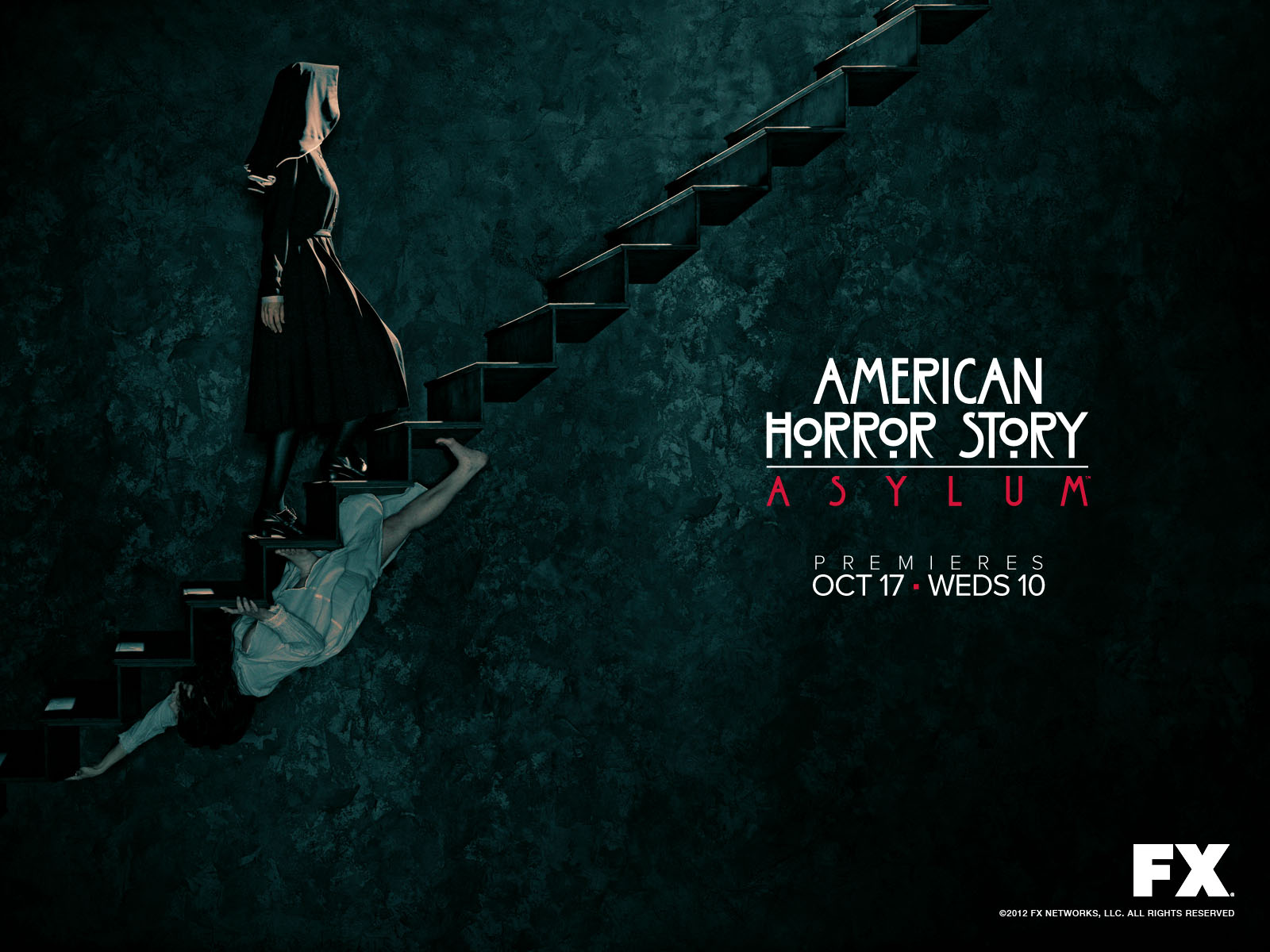
Their first recommendation, if you're looking for a television series, is American Horror Story. This series currently has 3 seasons on Netflix, with the most current season still playing on FX. "Exploring humankind's unsettling capacity for evil, this darkly twisted drama plays upon the power of supernatural fears and everyday horrors." Each episode is like creepy onto of creepy. The weird sisters would recommend this series because it explores how people and humans deal with seeing and experiencing supernatural things. Sometimes, certain occurrences bring out the person someone really is and other times it can completely break a person down.


The witches' next recommendation is for The Blair Witch Project. "Three student filmmakers march into the woods to make a documentary about a fabled witch credited with a string of murders dating back 200 years ago." This documentary-style movie will make you feel the presence of the horror that the characters went through. Obviously, the witches would choose this movie because the characters think they are going to mock a witch that never actually existed or committed the murders that happened in the past. Rule number 1: Never mock a witch. This movie extends the idea of the supernatural, specifically witches, that deal with murders, evil and prophecies, all of witch are components of the roles the weird sisters play in Macbeth.


Perfect Sisters is sort of different from the category of the other shows the three witches would most likely recommend. "Based on a real-life incident, two sisters manage to cover up the murder of their mother but their story unravels when they tell their friends." This movie steps back a little from the horror/thriller but still infuses it with mystery. The witches pick this one also because of the relationship between the two sisters, dealing with a secret and dealing with the murder of their mother. In Macbeth, the witches are referred to as "weird sisters," but Shakespeare doesn't elaborate any further on their relationship. We could learn more about the relationship between the witches from this recommendation.


Another choice the three weird sisters recommend is Oculus. Personally, I have seen (more like forced to see) this movie and it is creeeeeepy. "Now young adults, siblings Tim and Kaylie are still trying to recover from -- and get to the bottom of -- their parents' deaths more than a decade ago." I won't spoil it, but let's just say there is a mirror involved. With that as part of the context, the witches would probably recommend this movie because the mirror relates to the theme of appearance vs. reality. Some people may see one thing when they look in the mirror; others may see something completely different. This recommendation would help readers understand how the presence of the witches is only known by some. Macbeth knew he saw them. Banquo was unsure of whether or not he saw them.  


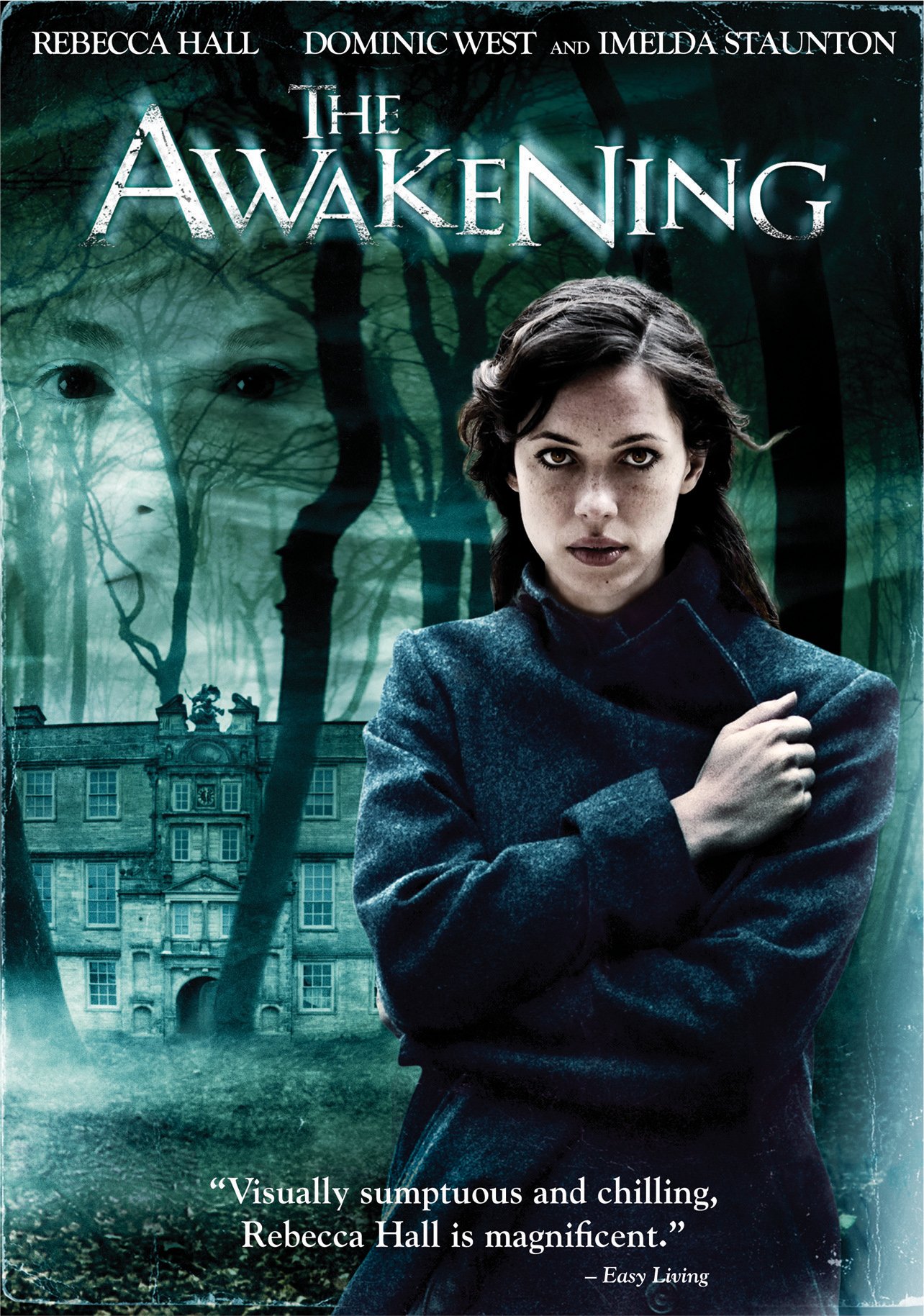
Lastly, if you didn't like the sound of any of the previous shows the witches recommended, The Awakening may be one you could handle. "A haunted boarding school calls on Florence Cathcart, who disproves hoaxes for a living. But the strange place leads Cathcart to question rationality." More mystery than horror, this movie is about how occurrences, such as people seeing ghosts and objects moving without being touched, can be questioned and how not everything has a rational answer. In Macbeth, Macbeth himself questions reality, especially when he thinks he sees the ghost of Banquo. This last recommendation the witches may have allows us to look at the themes of appearance vs. reality and the supernatural.


So if you're ever in the mood to be thoroughly scared, just take into account a recommendation from the three witches. But make sure you're ready, because things can't be unseen.


Saturday, November 15, 2014

Are you a man, Macbeth?

The time is the 21st century. Values and ideals of "manhood" have changed to a degree since Shakespeare's times. When reading Macbeth, Lady Macbeth, in particular, frequently comments on Macbeth's manhood, or lack there of. In the lead up to the murder of King Duncan, Macbeth is hesitant because he is faced with killing the King, who is also his friend, for the throne.

In Act 1, Scene 7, lines 49-51, Lady Macbeth says " When you durst do it, then you were a man;/And to be more than that you were, you would/Be so much more the man." Here Lady M is saying that once he commits the murder and "durst do it," he will become "more the man" than he was before. This ideal of having to kill someone to prove, especially to your wife, that you are a man is a value that society had in the 16th century. I also don't agree with the fact that Lady Macbeth sort of belittles Macbeth when he says he doesn't want to and can't kill Duncan. Mocking his inability to carry out a task (such as MURDER) is not helping his manhood. After Duncan is dead and Macbeth and his Lady are conversing, Macbeth says "I am afraid to think what I have done." (2.2.55) Macbeth's conscience is wavering at this point, which is a something that wouldn't happen to a "strong man."


In modern times, the values of manhood have been altered.  My views are different from those in the text because I personally don't think murdering someone constitutes a guy as a "man." Quite the opposite, I'd say. But by saying that would be the opposite, I'm not saying that he would be considered feminine. He would be seen as a figure that resorts to violence to solve problems, which is not a good way to deal with your problems. Obviously.

Society I think, as a whole, says that values such as being respectful, knowledgeable, and having the ability to get things done in a mature way represent a guy who has reached manhood. But "manhood" itself isn't a clearly defined concept and doesn't have a clearly defined time in a guy's life where it's like Boom, you are now considered a man.

I think values for manhood should be determine by men, as a whole, but they should also take into consideration what values women like. For me personally, a guy will not (and should not) have to kill someone to prove his manhood. All that will get you is life in jail. Just bring me some chocolate and I'll accept your manhood, in whatever state it may be.

On a side note, it's also really kind of weird, from today's stand point, that Lady Macbeth is like You're such a wimp, just kill the king already . . . Oh you're not going to do it? Well I will. Oh wait, he looks like my father, so I can't actually do it. But Lady Macbeth's entrancement with becoming more masculine is another topic for exploration which I'll save for another time.